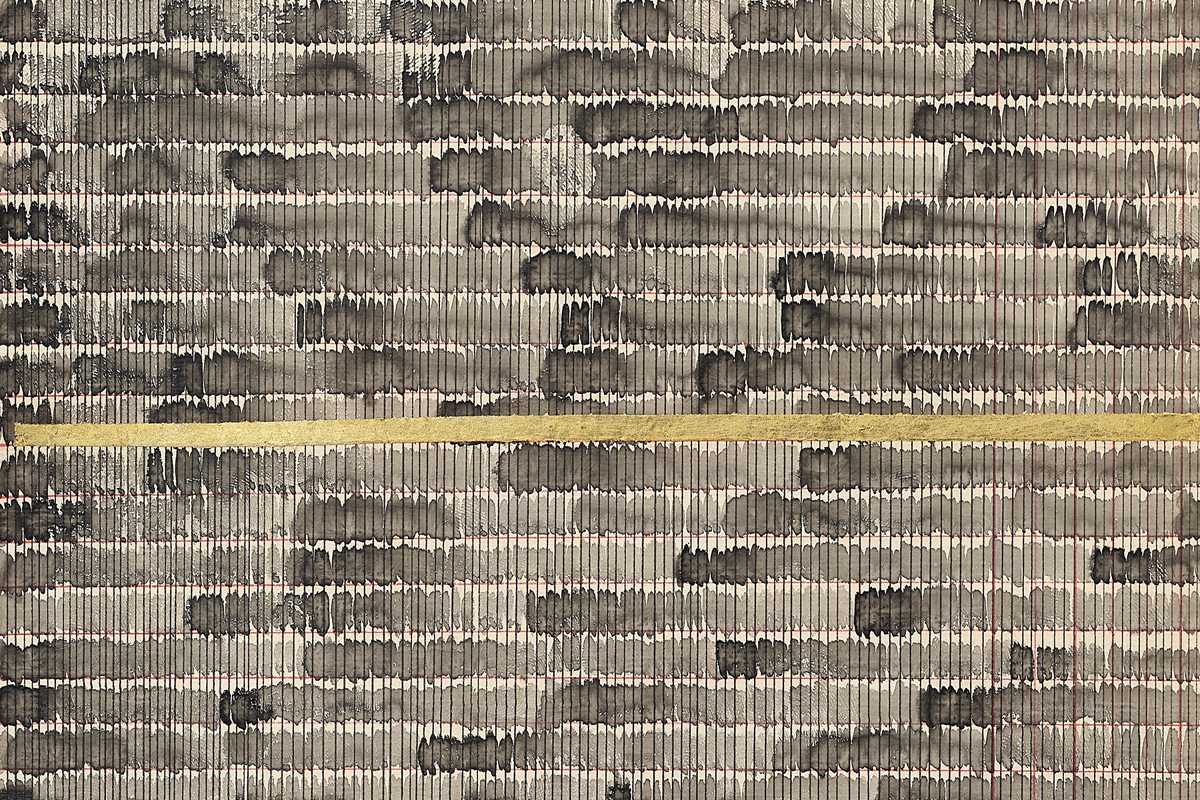

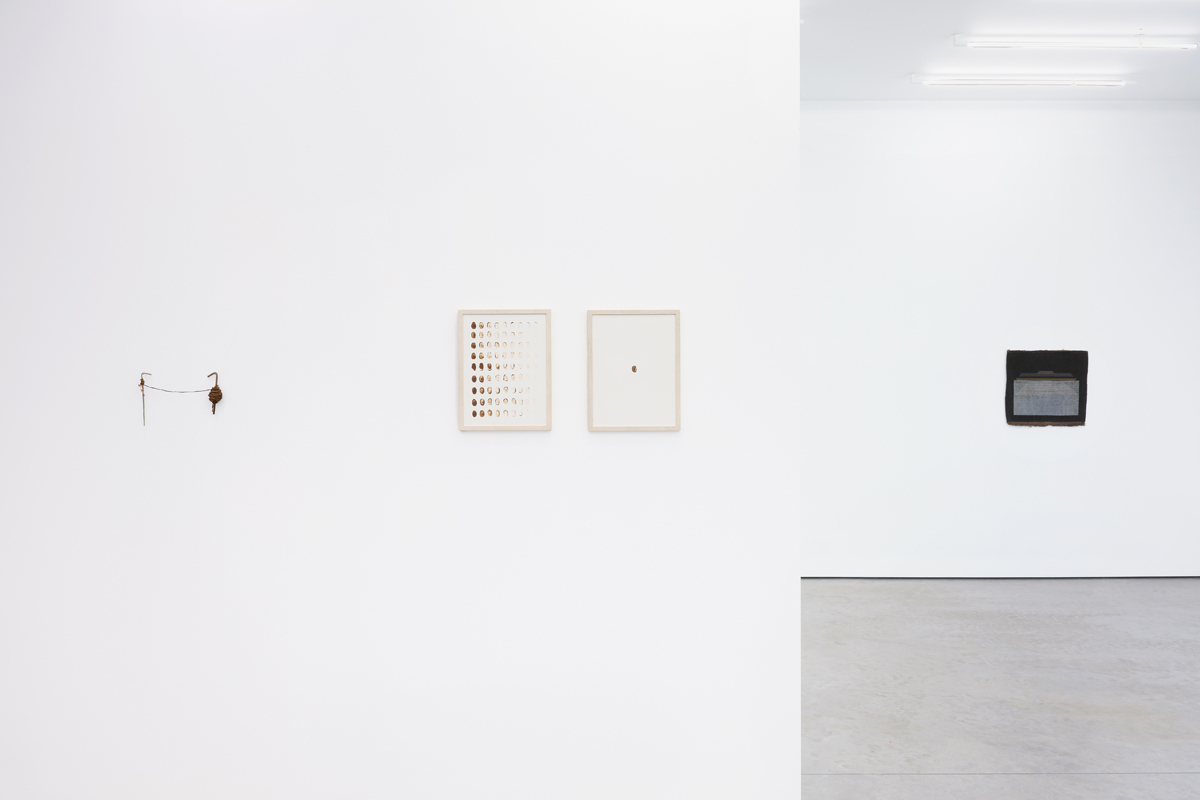

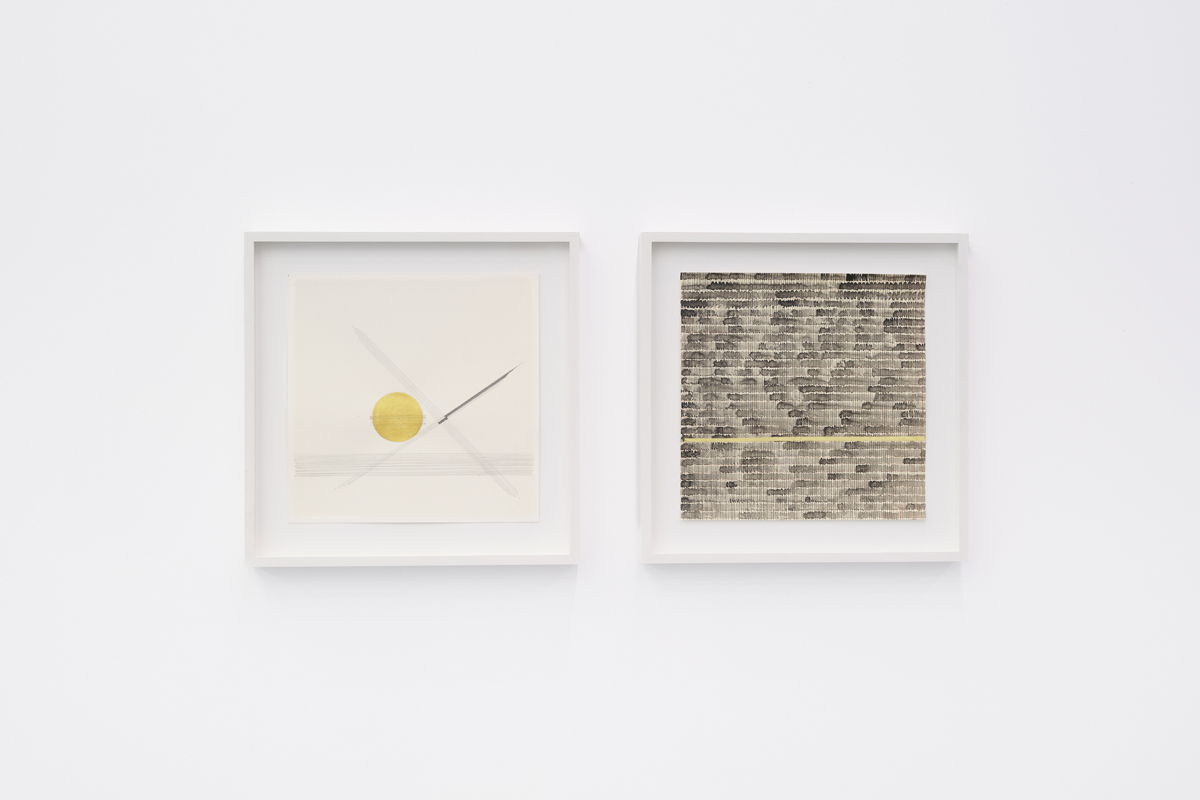



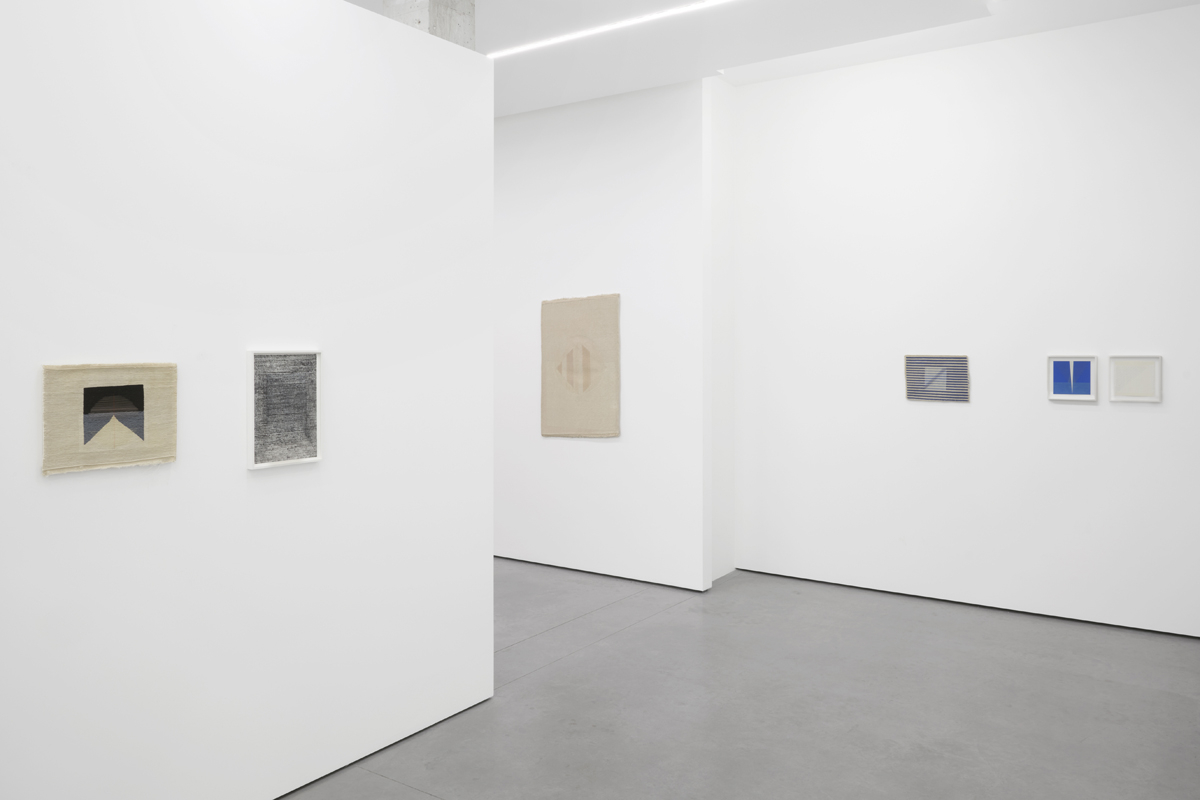
German-Iranian artist Haleh Redjaian makes use of the universal language of abstraction to draw upon the human tendency of overlaying reality with structures and systems to apprehend what cannot be otherwise grasped. In her drawings, carpets and spatial thread installations, the artist deploys ready–made or hand-drawn grids and lines as a framework for her geometric elaborations. By allowing irregularities and deviations within this strict order, she acknowledges the ever-present and unforeseen surprises that make up our incomprehensible lives. Her drawings consist of layer upon layer of repetitive line structures in graphite, overlaid with patterns of geometrical shapes in a watercolor palette and shimmering golden details. These light distractions subtly break out of the rigid rational systems that try to contain them.
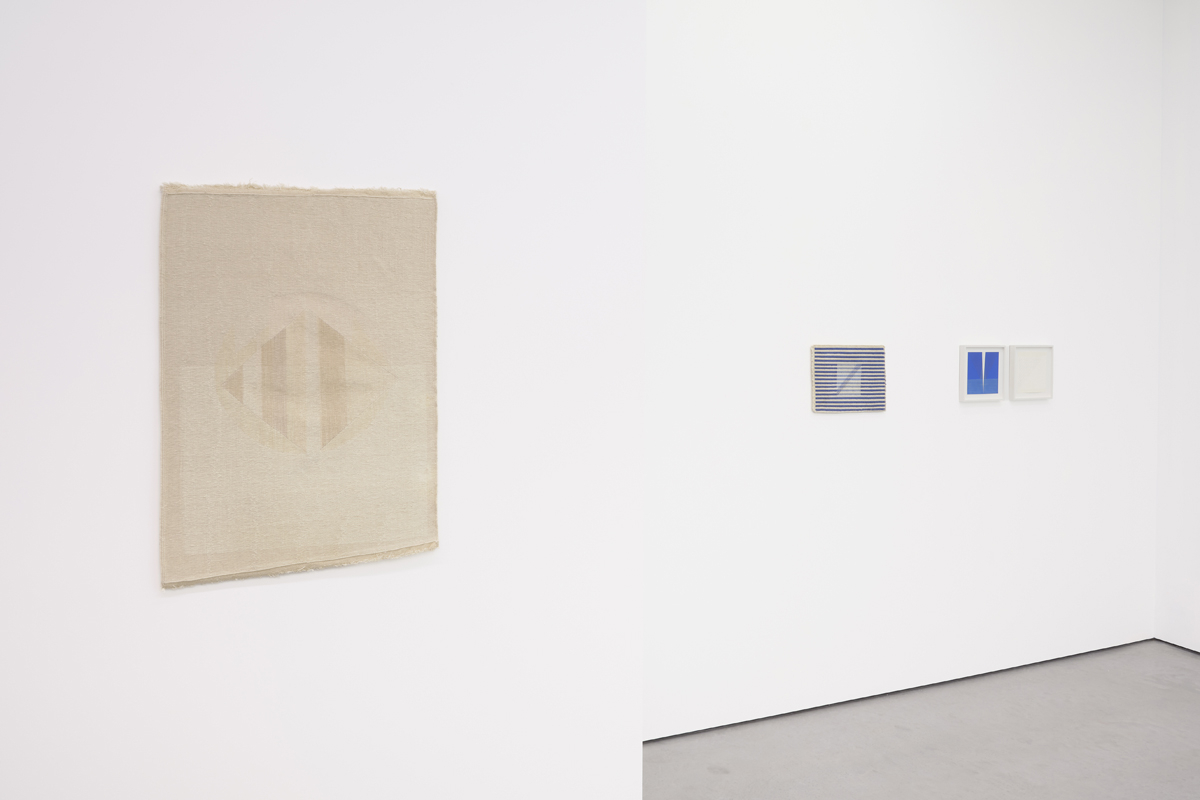
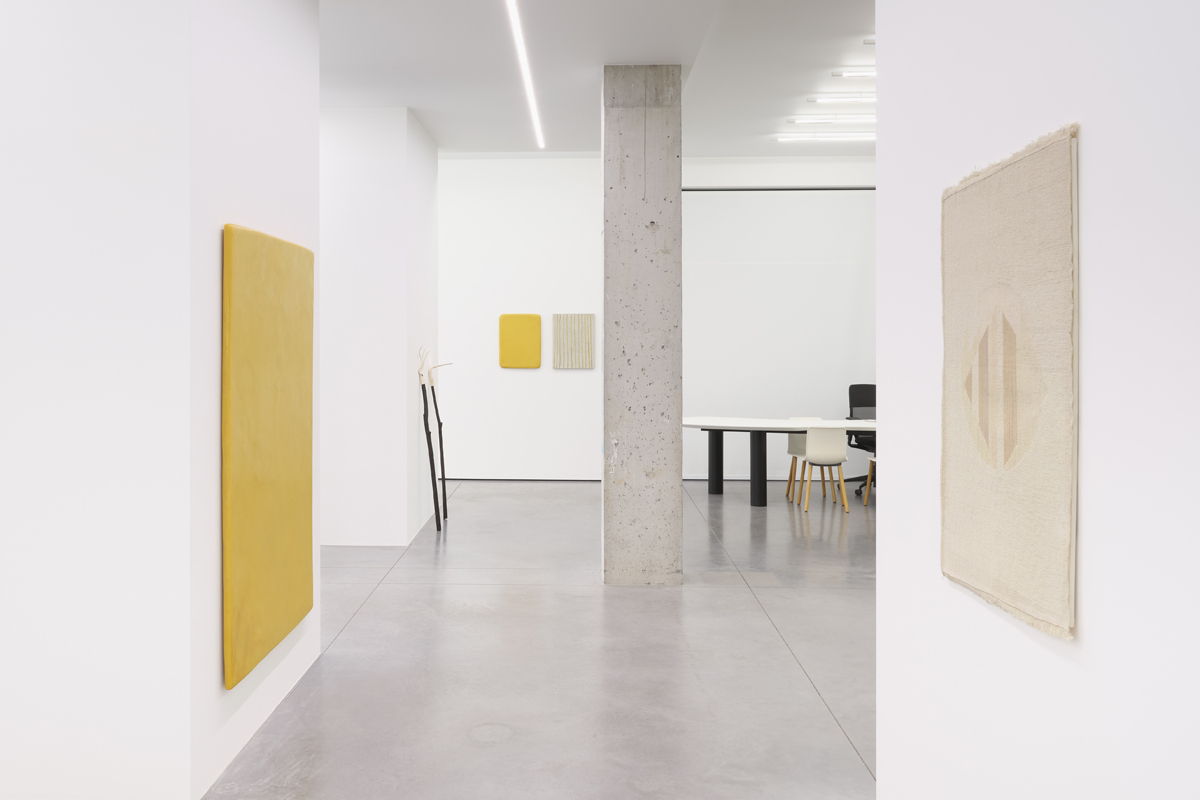
Appropriating the rich Iranian heritage of textile weaving, the artist interprets her visual vocabulary in a series of hand-knitted carpets. The minimalistic white knitted carpets are sourced from a manufacturer in Kerman, Iran, and function as the backdrop on which Redjaian prints and stiches minimal, long fine threads, presenting a thought-provoking dialogue between tradition and modernity, Middle-Eastern ornament and Western modernist aesthetics.
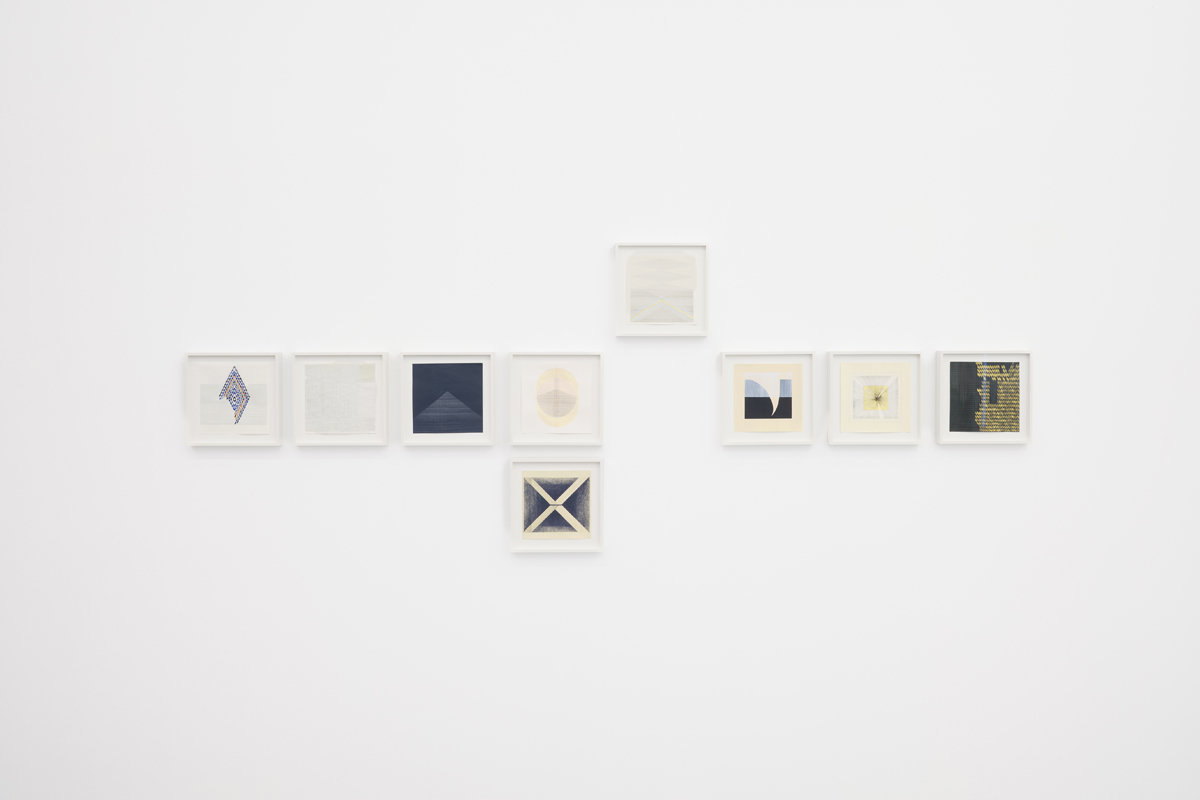
‘Notes for Daydreaming’ is an ongoing series that began in 2018. The series was inspired by Gaston Bachelard’s ‘The Poetics of Space’ and was also partly related to the exhibition ‘Inhabiting the Grid’.
Redjaian began reading ‘The Poetics of Space’ because poetics and architecture have always played an important role in her work. When she encountered Bachelard’s reflections on the phenomenology of reverie — or daydreaming — she realised how captivating and meaningful this subject was to her. It made her aware that daydreaming, though often overlooked, is a subconscious and yet essential aspect of life.’
Daydreaming reveals much about ourselves. The daydreamer enters a fluid state in which thoughts move freely and without resistance. Streams of colour, memories, and words intertwine with one another. In this state we become aware of the remarkable relationship between human imagination, consciousness, and intimate spaces — spaces such as a house, a drawer, a bedside table, as well as spaces of vast expansion.
Bachelard suggests that the greatest power of the poetic image lies in its ability to grant us deeper access to the soul and to consciousness through reverie — a concept that comes closest to, though is not identical with, psychology’s notion of “positive constructive daydreaming,” a particular form of imaginative flight.
For Redjaian, Bachelard’s reflections on memory in relation to the experience of space are especially compelling and influential, both in my drawings and in my spatial works. His thinking touches on the connections between mental processes, the social and physical spaces that surround us, and the traces of our past experiences.
The drawings themselves were created using a wide range of materials — graphite, watercolour, acrylic paint, tape, and collage. The medium remained open and experimental; only the size of the paper was predetermined. Redjaian chose a format that she could easily handle, allowing these works to function as “notes” on daydreaming — pieces that could emerge anywhere and at any moment.
